DRAGON
Draco
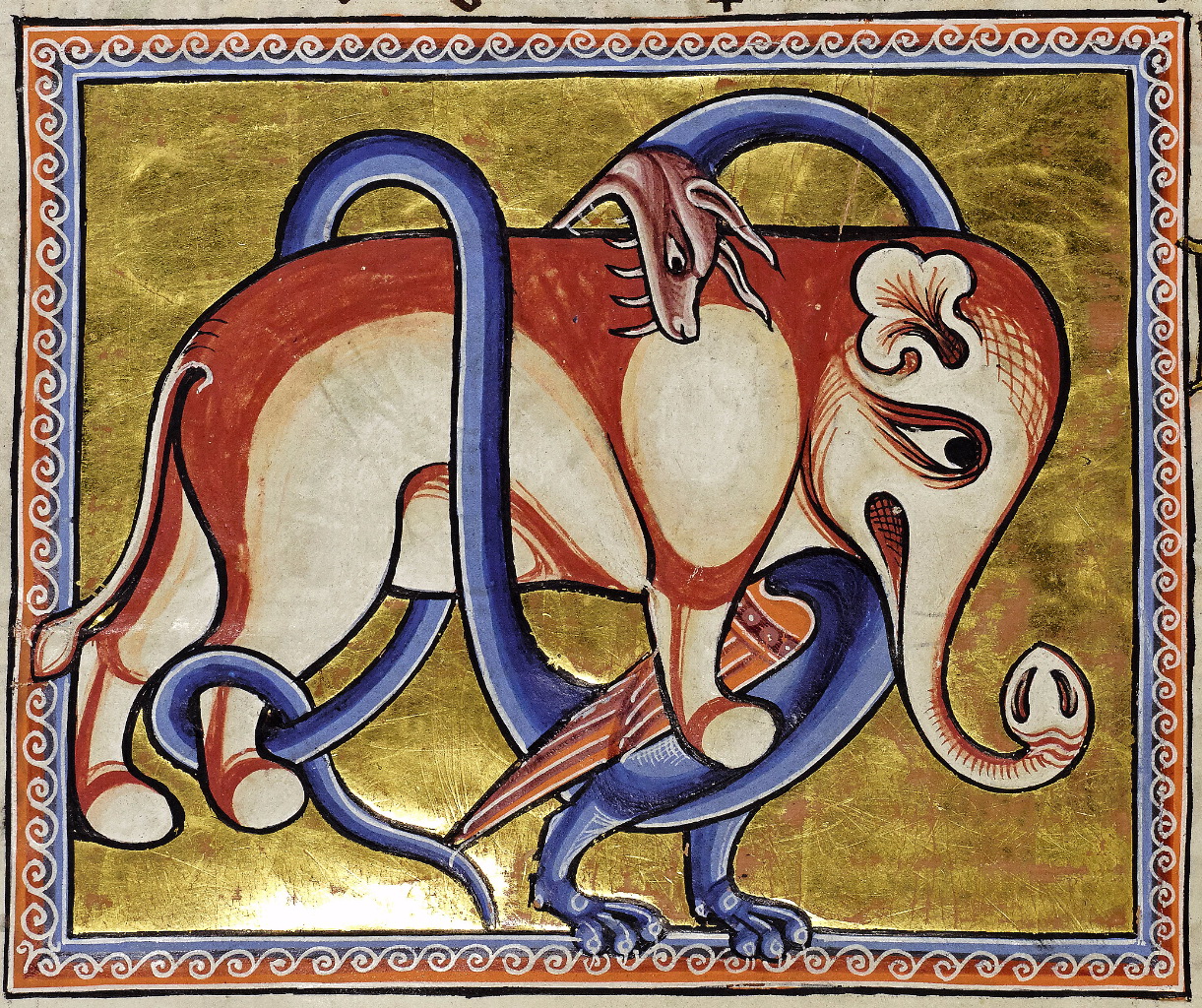
IMAGE SOURCE · WIKIMEDIA COMMONS · RIGHTS · COMMONS PUBLIC-DOMAIN FILE
COMMONS FILE PAGE ↗

MANUSCRIPT WITNESS
Isidore’s dragon is the largest of the serpents, and dangerous for its tail rather than its teeth.
It carries no venom. It waits on the paths elephants use, knots itself around their legs, and suffocates them.
The painter gave the dragon teeth and wings. The text mentions neither. The picture and the words were not made to match line for line.
THE LAYERS · KEPT DISTINCT
ISIDOREETYMOLOGIAE XII.4.4–5
The largest of all serpents and of all creatures on earth. Crested, with a small mouth and narrow passages for breath and tongue. Its strength is in the tail. It is born in Ethiopia and India.
MANUSCRIPT WITNESSABERDEEN MS 24 · f.65v
The Aberdeen Bestiary paints exactly the encounter Isidore describes: a dragon strangling an elephant.
ELSEWHERE IN THE LIBRARY · THE PANTHER’S ENEMY
The dragon is also the one animal the panther cannot befriend. That idea is already in Isidore (XII.2.8). The dragon fleeing underground from the panther’s sweet breath belongs to a later layer. See the panther record →
HOW WE KNOW WHAT WE THINK WE KNOW
Isidore XII.4.4–5 checked in two editions.
Aberdeen f.65v heading and miniature checked. The teeth-and-wings mismatch is documented by the Aberdeen commentary itself.
Commons file AberdeenBestiaryFolio065vDragonDetail.jpg, marked public domain.
Record levels, status labels, the streams diagram and the interface framing are authored by Make It Believable. They are not historical testimony.
WHAT WE DO NOT KNOW YET
- Isidore’s own sources for the dragon.