HYENA
Yena · hyaena
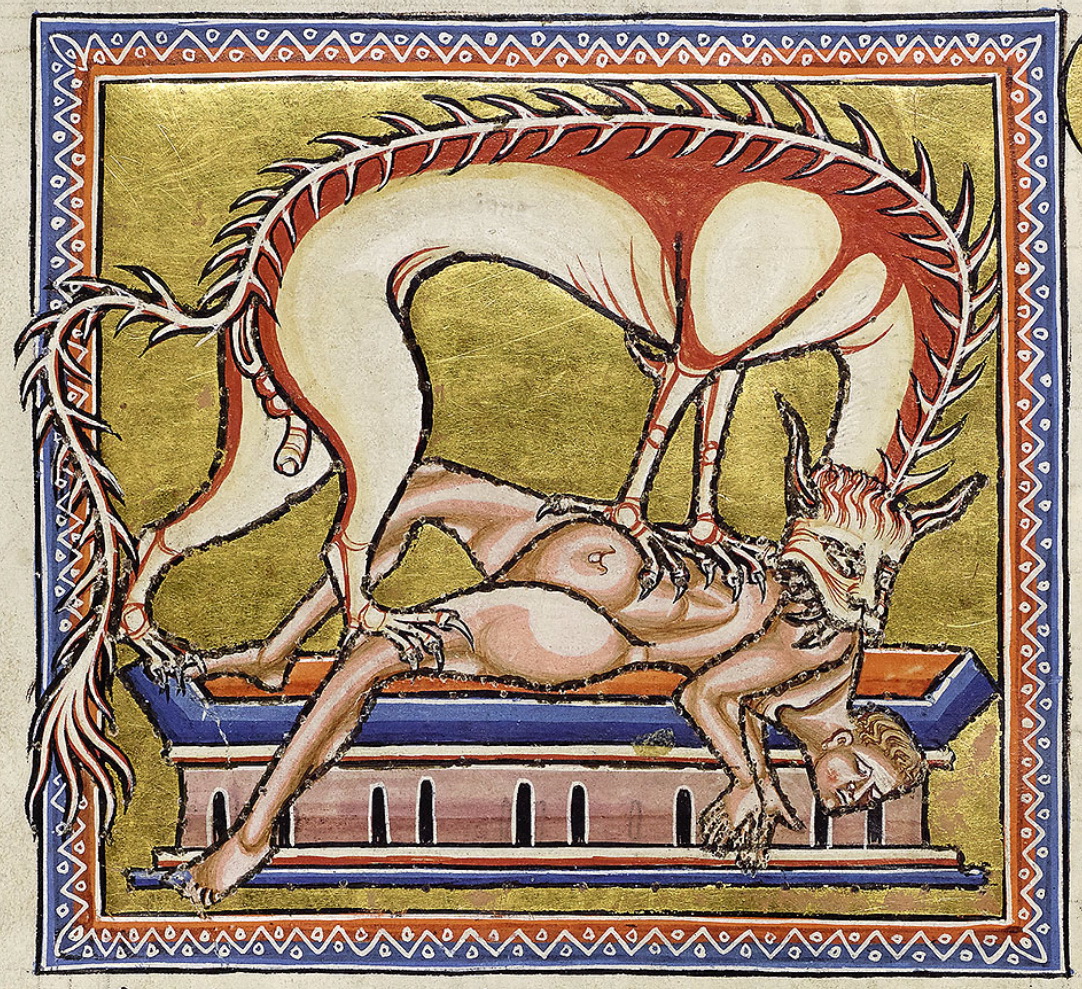
IMAGE SOURCE · WIKIMEDIA COMMONS · RIGHTS · COMMONS PUBLIC-DOMAIN FILE
COMMONS FILE PAGE ↗

LATER BESTIARY WITNESS · NON-ISIDOREAN
The hyena is the one animal in this set that Isidore’s book of animals does not describe. Its story reaches the Aberdeen Bestiary another way: through the Physiologus line, and through Solinus, whom the manuscript names.
Headed “Ibex, continued. De yena”. The text runs on to f.12r.
It lives among tombs and feeds on the bodies of the dead. It has the nature of both sexes, and so it is called unclean.
There is no hyena entry anywhere in Book XII of the Etymologiae. Two editions were checked. This record does not borrow a number from a neighbouring animal. It starts somewhere else.
THE LAYERS · KEPT DISTINCT
ISIDORENO BOOK XII ENTRY
Not present. An earlier draft cited XII.2.25, which is the dog. That citation has been removed.
PHYSIOLOGUS LINETOMB · BOTH SEXES · DOUBLE-MINDEDNESS
The hyena of the tombs, eating the dead and belonging to both sexes, comes down the Physiologus line. The Aberdeen text reads it as an allegory of people who served God and then turned to idols and wealth, citing Jeremiah: “my heritage is to me as the den of a hyena.”
SOLINUSNAMED IN THE ABERDEEN TEXT
The manuscript names Solinus for a set of stranger habits. The hyena circles sheepfolds and houses at night. It learns human speech to lure people out, and imitates retching to draw dogs. A dog touched by its shadow loses its bark. Its spine is so rigid that it must turn its whole body to look round.
The exact Solinus passage has not been checked. SOURCE REQUIRED before a section number appears here.
MANUSCRIPT WITNESSABERDEEN MS 24 · f.11v–12r
The miniature shows the hyena with both sets of organs displayed, beside a human figure in a tomb. Dense prick-marks around the man and the animal survive from transferring the design, a trace of how the picture was made.
HOW WE KNOW WHAT WE THINK WE KNOW
Book XII of the Etymologiae checked in two editions: no hyena entry.
Aberdeen f.11v checked on the university’s folio page, including the Solinus attribution and the pricking noted in the commentary.
Commons file F11v-aberdeen-best-detail.jpg, marked public domain.
Isidore is reported to mention the hyena once outside Book XII. Its section number has not been confirmed, so that mention is not published here.
Record levels, status labels, the streams diagram and the interface framing are authored by Make It Believable. They are not historical testimony.
WHAT WE DO NOT KNOW YET
- The Physiologus version behind the Aberdeen hyena.
- The exact Solinus passages the manuscript draws on.